San Antonio, Texas
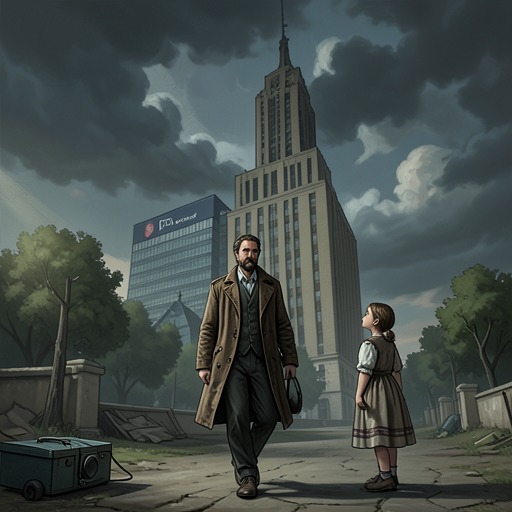
News of the WorldSan Antonio, Texas, is a destination on the route to return Johanna Leonberger to her surviving relatives, but it is more than a point on a map for Jefferson Kyle Kidd. He spent years there, established a printing business, married into an old local family, and came to know the people and roads that make him a suitable escort. The city thus joins two histories in the novel: Johanna’s forced return to a family she does not know, and Kidd’s established life, remembered through work, marriage, and loss.
Setting and Connections
Johanna’s connection to San Antonio begins with the account of her capture. Britt Johnson tells Kidd that she is believed to be Johanna Leonberger, taken four years earlier at age six from near Castroville, down near San Antonio. The place name locates the violence that separated her from her family without making the city itself the scene of the raid. By the time she appears in Britt’s wagon, the journey north has already carried her away from the country to which she is now supposed to return.
The return arrangement also runs through San Antonio. Johanna’s aunt and uncle, Wilhelm and Anna Leonberger, send particulars about her to Agent Hammond through a major from San Antonio. They provide a fifty-dollar gold piece for her transport to Castroville, and Britt takes responsibility for getting her out of Indian Territory and across the Red River. San Antonio is therefore not simply the final destination named on a journey: it is part of the network of kin, military communication, and payment that makes the journey possible. The living relatives’ effort reaches Johanna through intermediaries, while the route south remains uncertain and difficult.
Kidd’s Years in the City
Kidd’s knowledge of the region comes from lived experience. He had spent years in San Antonio and married into an old San Antonio family; when Britt objects that the trip is not far but that he does not know the people there, Kidd recognizes the difference between distance and familiarity. Britt does know the people, but Kidd’s own past makes him the more fitting guide for the southern journey. The decision rests on social knowledge as well as geography.
Kidd’s Texas life began after he had delayed his departure while caring for his widowed mother and younger sisters. Once his mother had died and both sisters were married, he left for Texas after the events at the Alamo and San Jacinto. During President Tyler’s war with Mexico, when he was nearly fifty, he had long since settled in San Antonio and finally met his wife. This chronology presents the city not as a brief stop in a mobile life, but as the place where an earlier wandering gave way to sustained work and a household.
Printing and Public Life
Kidd established his press on the first floor of a new modern building owned by the lawyer Branholme, in the Plaza de Las Islas, also called Main Plaza. The setting places his trade in a named public center. To print for local needs, he found type that included tildes, the aigu accent, and inverted exclamation and question marks, then studied Spanish. The work required him to adapt his equipment and knowledge to the language in which many of his customers needed printed matter.
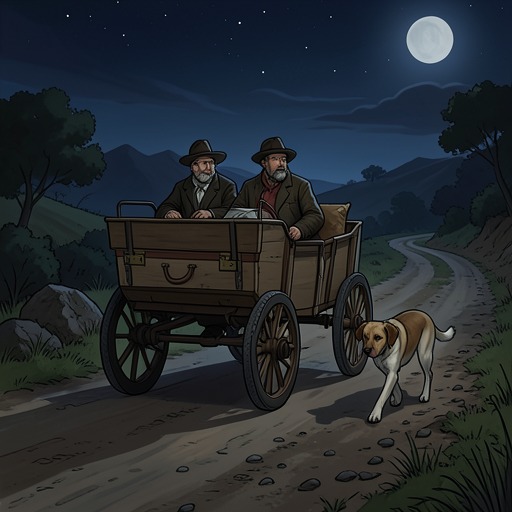
His business connected several kinds of local activity. He printed circulars and broadsheets, many for the Cathedral parish; the San Antonio newspaper supplied substantial business, as did the hay market and the saloons. These details give the city a practical texture shaped by religious, commercial, and social institutions. Kidd’s livelihood depended on serving different readers and customers, not on a single publication or audience. His printing work also helps explain how he could move through Texas carrying newspapers in a portfolio in his saddlebags: the press in San Antonio and the journeys beyond it belong to the same occupation.
Family, Memory, and the Return Route
The city is also bound to Kidd through his marriage to Maria Luisa Betancort y Real, who came from an old Spanish family. Their introduction required formal arrangements, a reminder that intimacy in this setting passed through family customs as well as personal encounter. Kidd’s recollection of first seeing her returns during his long rides with newspapers. He remembers her running down Soledad after the milkman and his buckskin horse because the milkman had passed her family’s house without stopping; she lost a shoe as she ran. The memory is sharply particular, yet it arrives with the pain of an irretrievable loss. San Antonio is consequently present in the narrative not only as the place where Kidd made a life, but as the setting held inside that life’s most intimate recollections.
When Kidd gives the route as Weatherford, Dallas, then south to Castroville and San Antonio, the list joins the immediate delivery journey to his older ties. Johanna’s relatives are in the country near which she was taken; Kidd knows the city and its people; and the family’s appeal has already traveled outward from San Antonio through military intermediaries. The route does not erase the distance between Johanna and the relatives she is being sent to. Instead, the city’s accumulated connections—family, work, memory, and regional familiarity—make it a credible destination while underscoring how much of her return depends on other people carrying her across that distance.